
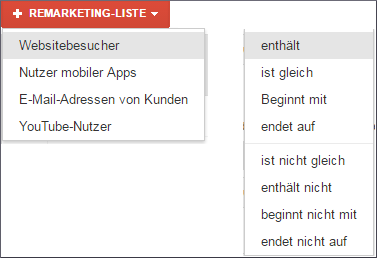
Creating Effective Remarketing Lists

Creating Effective Remarketing Lists

Craft powerful remarketing lists for targeted ad campaigns. Re-engage past visitors effectively to boost conversions and maximize your ROI.

In the competitive digital landscape, re-engaging potential customers is crucial for sustained growth. Simply driving initial traffic isn’t enough; true success often lies in what happens next. Effective remarketing campaigns turn browsers into buyers by intelligently targeting users who have already shown interest in your product or service. This process involves segmenting your audience precisely, building lists based on their interactions, and delivering tailored messages.

Overview:

  • Remarketing focuses on re-engaging users who previously interacted with your website or app.
  • Audience segmentation is key to creating highly effective lists, moving beyond generic “all visitors.”
  • Data sources for lists include website activity, app usage, customer match data, and YouTube interactions.
  • Dynamic remarketing personalizes ads with specific products users viewed, boosting relevance.
  • Exclusion lists are vital to prevent showing ads to already converted customers or unqualified leads.
  • Frequent testing and iteration of list criteria and ad creatives are necessary for optimal performance.
  • Careful consideration of audience size, duration, and conversion paths improves campaign ROI.

Foundational Principles for Remarketing Listen Erstellen

My experience running digital campaigns, from small e-commerce shops to large enterprise clients in the US, consistently shows that the quality of your remarketing lists directly impacts campaign success. It’s not just about creating a list of “all website visitors.” That’s a starting point, but rarely the most effective strategy. We begin by segmenting users based on intent. Someone who visited a product page for more than 30 seconds shows higher intent than someone who bounced immediately from the homepage.

When you Remarketing Listen Erstellen, think about the user journey. What specific actions indicate a strong purchase signal?

  • Product Page Views: Users viewing specific items. This is prime for dynamic remarketing.
  • Cart Abandonment: The classic high-intent group. They were one step away from buying.
  • Category Page Browsers: Users interested in a product type, but not a specific item yet.
  • Content Engagers: Those who read blog posts or watched videos related to your offerings, suggesting interest in your niche.
  • Specific Event Triggers: E.g., signed up for a webinar, downloaded an ebook, used a search function.

Each of these segments warrants a different ad message. A cart abandoner needs a reminder or an incentive. A blog reader needs more educational content or an introduction to relevant products. The power lies in this specificity.

Advanced Strategies for Dynamic Remarketing

Beyond basic segmentation, dynamic remarketing takes personalization to the next level. This method allows you to show previous visitors ads for the exact products or services they viewed on your site. This requires a well-structured product feed (for e-commerce) or a service feed (for services businesses) integrated with your ad platform, like Google Ads. Setting up a robust feed ensures that ad creatives are automatically populated with relevant images, prices, and descriptions.

From a practical standpoint, this means if a user looks at a blue widget, they’ll see an ad for that blue widget. The effectiveness stems

Read Full News
Proven On-Demand Strategy Consultants for Market Entry

Proven On-Demand Strategy Consultants for Market Entry

Proven on-demand strategic guidance for businesses aiming for new market penetration. Expert consultants offer tailored insights without long-term commitments.

Entering new markets presents a complex array of challenges and opportunities. Businesses often grapple with resource constraints, a lack of specific regional knowledge, or the need for specialized expertise to make informed decisions. This is where On-Demand Strategy Consultants for Market Entry prove invaluable. They offer focused, timely support, helping organizations avoid costly missteps and capitalize on emerging prospects without the overhead of permanent hires.

Overview:

  • On-Demand Strategy Consultants for Market Entry provide specialized, flexible expertise.
  • They help companies rapidly assess market viability and develop targeted entry plans.
  • Consultants bring real-world experience, reducing risk and accelerating time to market.
  • This model offers cost efficiency, avoiding the long-term commitment of traditional consulting firms.
  • Expertise covers regulatory landscapes, competitive analysis, and cultural nuances.
  • Successful market entry often relies on external, objective perspectives.
  • These consultants are crucial for businesses targeting regions like the US.

On-Demand Strategy Consultants for Market Entry: A Flexible Approach

Businesses rarely have every internal capability needed for every strategic initiative. Market entry is a prime example. The precise expertise required for, say, a software firm entering the US market might only be needed for a few months. Engaging On-Demand Strategy Consultants for Market Entry allows companies to access high-caliber knowledge exactly when and where it is needed. This approach contrasts sharply with traditional, long-term consulting engagements. It offers agility and cost-effectiveness.

Our experience shows this flexibility leads to quicker decision-making. Project cycles shorten. Companies can pivot strategies based on real-time insights from seasoned professionals. These consultants have a proven track record, often having guided multiple businesses through similar transitions. They understand the nuances of various industries and geographical regions. This flexibility is a core advantage for companies aiming for strategic, yet rapid, expansion.

Building a Solid Market Entry Framework

A robust market entry framework is fundamental to success. This framework begins with thorough market research, identifying target demographics, and understanding local consumer behavior. It extends to competitor analysis, mapping out their strengths and weaknesses. Crucially, a good framework addresses regulatory requirements and potential legal hurdles. These elements are critical before any significant investment.

Creating this framework internally can strain resources, especially for smaller to medium-sized enterprises. External advisors bring an objective lens. They are not tied to internal politics or existing company paradigms. Their role is to provide a clear, data-driven pathway. This involves assessing distribution channels, pricing strategies, and localized marketing efforts. A well-built framework mitigates risk and sets realistic expectations for market performance.

Leveraging On-Demand Strategy Consultants for Market Entry for Rapid Scale

Speed is often a competitive advantage in market expansion. Delaying entry can mean missing critical windows of opportunity. On-Demand Strategy Consultants for Market Entry are structured to deliver rapid insights and actionable plans. Their experience allows them to quickly onboard, assess a situation, and begin contributing meaningfully. This agility is vital for companies aiming to scale quickly in new territories.

For example, a European

Read Full News
Selecting the Best Penetration Testing Tools Safely

Selecting the Best Penetration Testing Tools Safely

Selecting effective Penetration Testing Tools requires practical knowledge of capabilities, safety protocols, and ongoing maintenance. Prioritize secure, proven solutions for robust cybersecurity.

When assessing an organization’s security posture, the choice of Penetration Testing Tools is paramount. It’s not simply about acquiring software; it’s about aligning the right instruments with specific security objectives and operational realities. My experience in this field shows that effective tool selection hinges on understanding your attack surface, regulatory demands, and the inherent risks of employing powerful testing utilities. A meticulous approach ensures both thorough testing and adherence to safety guidelines, preventing unintended consequences.

Overview:

  • Selecting appropriate Penetration Testing Tools starts with clear requirements and scope definition.
  • Understanding tool capabilities and limitations is critical for accurate assessments.
  • Security teams must prioritize safe operational practices to prevent adverse impacts.
  • Regular maintenance, updates, and training ensure tools remain effective and secure.
  • Legal and ethical frameworks heavily influence the permissible use of security testing software.
  • A balanced approach, combining commercial and open-source options, often yields the best results.

Establishing Requirements for Penetration Testing Tools

Before any procurement, clearly define your testing objectives. What specific assets require evaluation? Are you targeting web applications, network infrastructure, cloud environments, or APIs? Each domain demands specialized Penetration Testing Tools. For instance, a network-focused engagement will rely on different utilities than an application security review. Your team’s skill set is also a major factor; complex tools require significant expertise to wield effectively and safely. There’s little value in acquiring a sophisticated platform if your team lacks the training to maximize its potential.

Compliance standards often dictate certain testing requirements. Organizations operating in the US or other regulated regions must adhere to frameworks like HIPAA, PCI DSS, or NIST guidelines. These mandates can influence the type of security assessments needed and, subsequently, the tools chosen to perform them. Budget constraints will always play a role. Open-source tools offer powerful capabilities without licensing costs, while commercial solutions provide dedicated support, user-friendly interfaces, and often more advanced reporting features. A thoughtful requirements gathering phase lays the groundwork for successful, impactful testing.

Understanding Tool Capabilities and Limitations

No single tool provides a silver bullet for all security testing needs. Some Penetration Testing Tools excel at automated vulnerability scanning, quickly identifying known weaknesses across large networks. Others are geared towards manual exploitation, requiring a skilled human operator to chain together vulnerabilities and simulate complex attack paths. It’s crucial to understand what each tool is designed to do—and what it cannot do. For example, an automated scanner might miss logical flaws in an application that only a manual review can uncover. Conversely, manual testing is resource-intensive and impractical for initial broad sweeps.

We often encounter situations where teams over-rely on a single tool’s output. This can lead to false positives, wasting valuable remediation time, or worse, false negatives, providing a dangerous sense of security. Human validation and expertise remain indispensable. Combining different types of tools—for instance, an initial automated scan followed by targeted manual testing using an exploit framework—often provides

Read Full News
Proven strategies to boost Mehrfamilienhaus kaufen Rendite

Proven strategies to boost Mehrfamilienhaus kaufen Rendite

Learn proven strategies to boost your Mehrfamilienhaus kaufen Rendite. Maximize returns through smart financing, location, and management.

The decision to acquire a Mehrfamilienhaus represents a significant commitment. From my firsthand experience in the real estate market, achieving a strong Mehrfamilienhaus kaufen Rendite requires more than just capital. It demands meticulous planning, sharp market insights, and proactive asset management. Investors often focus solely on purchase price, overlooking critical factors that significantly impact long-term profitability. True success comes from a holistic approach, where every aspect from financing to tenant relations is optimized for return.

Overview

  • Thorough market analysis is crucial before any investment.
  • Smart financing structures can dramatically improve cash flow.
  • Proactive property management minimizes vacancies and costs.
  • Regular maintenance preserves asset value and tenant satisfaction.
  • Strategic property upgrades can justify higher rents.
  • Understanding local regulations prevents costly legal issues.
  • Tenant retention directly impacts overall profitability.
  • Diversifying tenant types can stabilize income streams.

Optimizing Initial Investment for Mehrfamilienhaus kaufen Rendite

The foundation of a profitable Mehrfamilienhaus kaufen Rendite is laid during the initial acquisition phase. It begins with rigorous due diligence. Never skip a professional property inspection. Hidden defects can quickly erode projected returns. Beyond the physical structure, meticulously analyze the property’s financial history. Review past rental income, operating expenses, and vacancy rates. Are these figures realistic and sustainable? I always scrutinize utility bills and maintenance records for unexpected patterns.

Negotiating the purchase price is only one part of the equation. Also, assess acquisition costs like notary fees, land transfer tax, and agent commissions. These upfront expenses directly affect your initial yield. Consider the potential for forced appreciation through strategic improvements. A dated kitchen or bathroom renovation might allow for significantly higher rents, thereby boosting your Mehrfamilienhaus kaufen Rendite post-acquisition. Evaluate the neighborhood’s long-term growth potential. A property in an area with planned infrastructure projects or increasing demand offers better appreciation prospects. Understanding the local rental market dynamics is paramount. What are comparable rents? What tenant demographics does the area attract? This detailed analysis sets a realistic expectation for future income.

Strategic Property Management for Sustained Income

Effective property management is not merely about collecting rent; it is a direct driver of sustained income and asset value. Proactive management minimizes vacancies, controls costs, and retains good tenants. A high tenant turnover is incredibly expensive. Every time a unit becomes vacant, you incur marketing costs, cleaning expenses, and potential income loss. My approach emphasizes robust tenant screening processes. This helps select reliable tenants who pay on time and care for the property. A clear, well-enforced lease agreement is also fundamental.

Regular property maintenance is non-negotiable. Small issues, if ignored, can escalate into major, costly repairs. Implement a preventative maintenance schedule for heating systems, roofs, and common areas. Happy tenants are more likely to stay, reducing churn. Promptly address their concerns and foster a positive living environment. This builds goodwill and reduces wear and tear. Furthermore, continuously evaluate operating expenses. Can insurance costs be optimized? Are service contracts competitive? Even small savings accumulate over

Read Full News
Authoritative guide to Moving Wall Systems in small homes

Authoritative guide to Moving Wall Systems in small homes

Optimize your studio apartment with adaptable walls. Learn practical Moving Wall Systems for Studio Apartments for flexible living.

Living in a studio apartment often means getting creative with space. From my own experience, both personally and through clients in metropolitan areas across the US, the need for dynamic, adaptable living environments is constant. Traditional layouts simply don’t always work. This is where the concept of a moving wall system truly shines. It allows a single room to serve multiple functions throughout the day, a game-changer for compact urban dwellings.

Overview

  • Moving wall systems redefine small home living by offering flexible space configurations.
  • They are particularly beneficial for studio apartments, allowing for distinct zones within a single room.
  • These systems range from track-mounted panels to integrated furniture walls.
  • Careful planning is essential for design, installation, and daily operation.
  • Benefits include improved privacy, optimized space usage, and increased property value.
  • Key considerations involve structural assessment, material choices, and professional installation.
  • Proper maintenance ensures longevity and smooth functionality of the system.

Understanding Moving Wall Systems for Studio Apartments

When we talk about Moving Wall Systems for Studio Apartments, we’re referring to non-load-bearing partitions that can be repositioned. These aren’t just room dividers; they are architectural elements designed to create or dissolve defined spaces. Picture a bedroom that disappears into a living room, or a private office that folds away. This adaptability is crucial in a studio where square footage is at a premium.

I’ve seen firsthand how these systems can completely alter the perception and utility of a small home. They are not merely about dividing space; they are about giving inhabitants control over their environment. The goal is always to maximize utility without permanent construction. This flexibility prevents the common “box” feeling often associated with studios.

Practical Applications of Moving Wall Systems for Studio Apartments

The practical applications for Moving Wall Systems for Studio Apartments are numerous. In my work, I’ve implemented these systems to carve out distinct areas. For example, a single wall panel can slide across to enclose a sleeping area, offering privacy from the main living space. Another popular use is creating a temporary home office or a dining nook. These walls can also conceal storage or integrate fold-down furniture.

I recall a project where a client needed a quiet zone for video calls but also wanted an open living space. We installed a pair of sliding acoustic panels. They provided sound dampening when closed, making a perfect workspace. When open, the studio felt expansive again. This level of versatility improves quality of life dramatically in smaller homes. Such systems make a small apartment live much larger.

Key Considerations for Small Home Space Optimization

Optimizing small home space requires careful thought beyond just installing a moving wall. It involves a holistic approach to design and functionality. Before even thinking about installation, assess your daily routines and how you use your space. What activities need privacy? What requires an open layout? Understanding these patterns guides system selection.

Material choice

Read Full News
Mastering Active Suspension & Chassis Dynamics

Mastering Active Suspension & Chassis Dynamics

Explore real-world applications of active suspension and chassis dynamics. Gain expertise in vehicle control, comfort, and performance.

Working within automotive engineering for years has provided a deep appreciation for how vehicle dynamics influence everything from daily commutes to high-performance track days. My experience has shown that traditional passive suspension systems, while robust, offer inherent trade-offs between ride comfort and handling precision. This fundamental compromise often limits a vehicle’s adaptability to varying road conditions and driving styles. It’s this inherent challenge that makes areas like Active Suspension & Chassis Dynamics so compelling and critical for modern vehicle design.

Overview

  • Active Suspension & Chassis Dynamics addresses the trade-offs of passive systems by using real-time adjustments.
  • These systems employ sensors, actuators, and control units to optimize ride quality and vehicle handling.
  • Key components include accelerometers, displacement sensors, hydraulic or electric actuators, and complex control algorithms.
  • Real-world applications range from luxury sedans to specialized military vehicles and racing cars.
  • Benefits include improved comfort, enhanced safety, and superior vehicle control across diverse conditions.
  • Future developments point towards predictive control, AI integration, and advanced sensor fusion for even greater adaptability.

Understanding the Fundamentals of Active Suspension & Chassis Dynamics

The core concept behind Active Suspension & Chassis Dynamics is the ability to actively influence a vehicle’s ride characteristics in real-time. Unlike passive systems, which rely on fixed spring and damper rates, active setups dynamically adjust suspension parameters based on sensor input and driving conditions. This allows for an independent control over the vertical motion of each wheel, effectively decoupling the comfort-handling compromise. Engineers often categorize these systems into fully active and semi-active types. Fully active systems can inject energy into the suspension, actively lifting or pushing down the wheels, offering the most control. Semi-active systems, more common in production vehicles, primarily adjust damping forces, dissipating energy rather than generating it. The objective is always to keep tires firmly on the road, manage body roll, and isolate passengers from road irregularities, all while ensuring precise steering response. This precise control over vehicle motion is what truly defines advanced chassis dynamics.

Components and Control in Active Suspension & Chassis Dynamics Systems

Implementing effective Active Suspension & Chassis Dynamics requires a sophisticated integration of hardware and software. At the heart of these systems are various sensors that monitor vehicle state: accelerometers track body and wheel movements, displacement sensors measure suspension travel, and yaw rate/roll rate sensors quantify rotational dynamics. This data feeds into a central electronic control unit (ECU). The ECU processes this information through complex algorithms, often predictive or adaptive, to determine the optimal damping or spring stiffness settings. Actuators then execute these commands. In semi-active systems, these are often continuously variable dampers, like magnetorheological (MR) fluids or electrorheological (ER) fluids, which change viscosity rapidly under an electric field. Fully active systems may use hydraulic cylinders or electric motors to apply direct forces. The precision and speed of these components are paramount; even milliseconds of delay can impact performance. The control logic prioritizes different goals – comfort, handling,

Read Full News
How to Navigate Business Formation in Dubai?

How to Navigate Business Formation in Dubai?

Starting a new enterprise in Dubai presents a wealth of opportunities due to its strategic location, pro-business policies, and thriving economy. Understanding the specific procedures for business formation in Dubai is crucial for aspiring entrepreneurs and established companies alike. This article provides a clear framework to help individuals successfully establish their presence in this dynamic market, detailing the essential steps and considerations from initial planning to operational setup. By adhering to regulatory requirements and selecting the appropriate business structure, new ventures can lay a strong foundation for growth and success in one of the world’s most attractive business hubs.

Key Takeaways

  • Dubai offers diverse business setup options including mainland, Free Zones, and offshore, each with distinct advantages.
  • Careful selection of your business activity and legal structure is the foundational step.
  • Choosing between a mainland setup (requiring a local sponsor for some activities) and a Free Zone (allowing 100% foreign ownership) is a key decision.
  • Document preparation, trade name reservation, and obtaining initial approvals are critical early stages.
  • Understanding the costs involved, including registration fees, licenses, and visas, is essential for budgeting.
  • Seeking expert guidance from business setup consultants can streamline the entire process.
  • Free Zones like Meydan Free Zone offer specific benefits such as tax exemptions, full repatriation of profits, and simplified procedures.
  • Ensuring compliance with local regulations and obtaining all necessary licenses is mandatory for legal operation.

What is Business Formation in Dubai?

Business formation in Dubai refers to the legal process of establishing a company or a commercial entity within the emirate. It involves a series of steps and approvals from various government authorities to ensure the business operates legally and compliantly.

  • Definition: It encompasses registering a legal entity, obtaining trade licenses, securing necessary permits, and fulfilling all governmental requirements for operations.
  • Legal Structures: Common types include Limited Liability Company (LLC), Sole Proprietorship, Branch Office, Representative Office, and various Free Zone establishments.
  • Operating Environments: Businesses can be set up in Dubai Mainland, one of its numerous Free Zones, or as an Offshore company. Each environment has specific regulations and benefits.

Why Establish a Business in Dubai?

Dubai’s economic stability, strategic location, and business-friendly environment make it an appealing destination for entrepreneurs and investors globally.

  • Strategic Location: Acts as a gateway between East and West, offering access to emerging markets in the Middle East, Africa, and Asia.
  • Economic Stability and Growth: A robust and diversified economy with continuous government investment in infrastructure and innovation.
  • Tax Advantages: Free Zones offer 0% corporate and personal income tax, and VAT (Value Added Tax) is applied at a low rate.
  • Full Repatriation of Profits: Free Zone companies can repatriate 100% of their capital and profits.
  • World-Class Infrastructure: Modern transportation networks, communication systems, and commercial facilities.
  • Diverse Talent Pool: An international workforce and a high standard of living attract professionals from around the globe.
  • Government Support: Pro-business policies, streamlined processes, and initiatives to support startups and SMEs.

Who Can Form a Business in Dubai?

Individuals, partnerships, and corporate entities from any nationality are generally

Read Full News
Creating Better Customer Retention Through Personalization

Creating Better Customer Retention Through Personalization

In today’s competitive market, attracting new customers can be costly, making customer retention a critical component of sustainable business growth. Personalization stands out as a powerful strategy to keep customers engaged, satisfied, and loyal over the long term. By tailoring experiences, communications, and offerings to individual customer needs and preferences, businesses can build deeper relationships, fostering a sense of value and belonging that encourages repeat business and reduces churn. Effective personalization moves beyond simply addressing a customer by name; it involves understanding their journey, anticipating their needs, and delivering relevant interactions at every touchpoint.

Overview

  • Personalization for retention involves tailoring customer experiences based on individual data and preferences.
  • Leveraging customer data is crucial for understanding behavior, purchase history, and engagement patterns.
  • Segmenting customers allows businesses to create more targeted and relevant messaging and offers.
  • Consistent and personalized communication across various channels strengthens customer relationships.
  • Personalized loyalty programs provide customized rewards and incentives, encouraging continued engagement.
  • The benefits of a personalized retention strategy include increased customer lifetime value and reduced churn rates.
  • Continuous analysis and adaptation of personalization strategies are essential for ongoing success.

What is Personalization in Customer Retention?

Personalization in customer retention refers to the practice of tailoring marketing messages, product recommendations, service interactions, and overall brand experiences to suit individual customer preferences, behaviors, and needs. It moves beyond generic, one-size-fits-all approaches, aiming to make each customer feel uniquely understood and valued. This can involve anything from personalized product suggestions based on past purchases, to custom email content, or even specialized customer service interactions. The goal is to create a more relevant and engaging experience that resonates deeply with the customer, thereby increasing their satisfaction and propensity to remain loyal to the brand.

How Does Data Drive Effective Personalization for Retention?

Data is the backbone of any successful personalization strategy. Businesses collect various types of information, including purchase history, browsing behavior, demographic details, interaction with marketing emails, social media activity, and feedback. Analyzing this data allows companies to build comprehensive customer profiles, identifying patterns, preferences, and potential churn risks. For instance, understanding that a customer frequently browses certain product categories but rarely completes a purchase might prompt a personalized discount offer for those items. Predictive analytics can even foresee future needs or potential dissatisfaction. Companies like afnagro.pt might leverage data on customer agricultural purchases, preferred communication methods, and seasonal buying habits to send targeted offers for seeds, fertilizers, or equipment at just the right time, fostering continued engagement and trust. Without robust data collection and intelligent analysis, personalization efforts would be mere guesswork, lacking the precision required to truly impact retention.

What Strategies Personalize Customer Communication?

Personalized communication strategies are vital for keeping customers connected and valued. These strategies involve delivering messages that are specific to the individual customer’s journey and preferences across various channels. Email marketing, for example, can include product recommendations based on browsing history, reminders about abandoned carts, or birthday greetings with special offers. SMS messages can provide real-time updates on orders or exclusive flash sales

Read Full News
Expert ETF Sparplan Vergleich 2026 Reliable Review

Expert ETF Sparplan Vergleich 2026 Reliable Review

Reliable expert analysis of ETF Sparplan Vergleich 2026. Learn key strategies for smart investing in European and US markets.

Understanding the landscape for exchange-traded funds (ETFs) and their associated savings plans in 2026 requires a practical, informed approach. My years in personal finance have shown me that a structured evaluation is key for sustainable wealth creation. This article offers insights based on market realities and observable trends, helping you make informed decisions about your investment strategy. We will focus on the specifics of comparing different ETF savings plans.

Overview

  • ETF Sparplan Vergleich 2026 necessitates reviewing broker fees, available ETFs, and plan flexibility.
  • Market conditions, including inflation and interest rates, will influence optimal ETF choices.
  • Diversification remains crucial, extending beyond regional focus to include various asset classes.
  • Automated rebalancing features within savings plans can simplify long-term portfolio management.
  • Long-term investors should prioritize cost-efficiency and consistent performance over short-term trends.
  • The selection of suitable platforms is critical for executing your chosen ETF savings plan effectively.
  • Tax implications of ETF investing, especially for distributions and capital gains, require careful attention.

Evaluating Your Portfolio with ETF Sparplan Vergleich 2026

When examining options for ETF Sparplan Vergleich 2026, the primary goal is often capital growth through consistent, automated investing. From my experience, the effectiveness of an ETF savings plan hinges on several factors: the underlying ETF’s quality, the broker’s fee structure, and the plan’s flexibility. Investors should critically assess TERs (Total Expense Ratios) and bid-ask spreads, as these seemingly small costs accumulate over time.

A well-structured savings plan ensures regular contributions, mitigating market timing risks through dollar-cost averaging. This disciplined approach is a cornerstone of successful long-term investing. Look for brokers offering a wide selection of no-fee or low-fee ETFs, especially those tracking broad market indices. Many platforms now provide robust filtering tools, making the selection process more straightforward.

Key Considerations for Your Investment Strategy

Developing a sound investment strategy involves more than just picking popular ETFs. It demands an understanding of your personal risk tolerance, investment horizon, and financial goals. Are you saving for retirement, a down payment, or a child’s education? Each goal might warrant a different allocation strategy. For instance, younger investors with a long time horizon might opt for higher equity exposure.

Considering global market dynamics is also essential. While many focus on European markets for their Sparplans, opportunities in the US market are significant. Accessing diverse regions, including emerging markets, can provide better risk-adjusted returns. Regularly reviewing your strategy ensures it remains aligned with your evolving circumstances and market changes.

Market Trends and the ETF Sparplan Vergleich 2026 Landscape

The financial markets are constantly evolving, and 2026 will present its own set of opportunities and challenges. Geopolitical events, central bank policies, and technological advancements all shape investment performance. When performing an ETF Sparplan Vergleich 2026, investors should consider ETFs that align with projected long-term trends, such as sustainable investing or specific technological sectors. However, over-concentration in niche areas can introduce undue risk.

Diversification remains paramount. A core-satellite

Read Full News
Why Hiring a Corporate Event Emcee Orlando Can Transform Your Event Experience

Why Hiring a Corporate Event Emcee Orlando Can Transform Your Event Experience

The Role of a Professional Emcee in Corporate Events

A successful corporate event is not just about the venue, speakers, or agenda. It is about how all these elements come together to create a seamless and engaging experience. This is where a corporate event emcee Orlando becomes a game-changer. A professional emcee is responsible for guiding the flow of the event, keeping the audience engaged, and ensuring that every segment transitions smoothly.

When you hire a corporate event emcee Orlando, you are not just hiring someone to make announcements. You are bringing in a trained professional who understands timing, audience psychology, and event dynamics. They set the tone from the beginning and maintain energy throughout the event, making sure attendees remain attentive and involved.

Creating a Strong First Impression

First impressions matter in any corporate gathering. The way an event begins often determines how the audience will perceive the rest of it. A skilled corporate event emcee Orlando knows how to open an event with confidence, clarity, and enthusiasm.

From welcoming guests to introducing the agenda, the emcee creates an atmosphere of professionalism and excitement. Instead of a dull or confusing start, attendees are immediately engaged and aware of what to expect. This strong opening helps build anticipation and sets a positive tone for the entire event.

A corporate event emcee Orlando also ensures that branding messages and company values are subtly integrated into the introduction, reinforcing the purpose of the event from the very beginning.

Maintaining Audience Engagement Throughout the Event

One of the biggest challenges in corporate events is keeping the audience engaged, especially during long sessions, presentations, or award ceremonies. A corporate event emcee Orlando plays a crucial role in solving this problem.

They use storytelling, humor, and interactive communication to keep the audience attentive. Instead of allowing energy levels to drop between sessions, the emcee bridges gaps with smooth transitions and engaging commentary.

A professional corporate event emcee Orlando understands how to read the room. If energy levels are low, they know how to lift the mood. If the audience is highly energetic, they channel that energy productively. This adaptability ensures that the event never feels dull or disconnected.

Ensuring Smooth Flow and Timing

Timing is everything in corporate events. Delays, awkward pauses, or disorganized transitions can negatively impact the overall experience. A corporate event emcee Orlando ensures that the entire schedule runs smoothly and on time.

They coordinate with speakers, organizers, and technical teams to maintain flow. If a speaker runs over time or a technical issue occurs, the emcee steps in to manage the situation without disrupting the audience experience.

With a corporate event emcee Orlando, you gain someone who acts as the central point of communication, ensuring that every segment of the event is well-coordinated and professionally executed.

Enhancing Audience Interaction and Participation

Modern corporate events are no longer passive experiences. Organizers now aim to create interactive and immersive environments. A corporate event emcee Orlando plays a key role in achieving this

Read Full News