


Key Takeaways
- Choose a truck around the trailer’s loaded weight, not its empty weight.
- Payload must cover people, gear, accessories, and trailer tongue or pin weight.
- Texas towing needs can range from flat highway runs to steep grades, ranch roads, wind, heat, and long-distance travel.
- The exact cab, bed, engine, drivetrain, tires, and hitch equipment determine a truck’s usable ratings.
- A capable towing setup should also be practical for school runs, job sites, parking lots, and everyday Texas driving.
From hauling livestock near the Panhandle to towing a camper toward the Hill Country or moving equipment across West Texas, a heavy-duty pickup needs to match the work it will actually do. Shoppers comparing a Ram 2500 for sale Texas should begin with realistic weights and usage patterns rather than relying on a single maximum towing number. A truck that feels confident with a properly loaded trailer can make long Texas distances less tiring. The goal is not simply to buy the biggest pickup available. It is to build a combination with adequate capacity, stable handling, dependable braking, and enough comfort for the days when no trailer is attached.
Why Truck Choice Starts With the Load
Start with the heaviest trailer load you expect to tow. A trailer’s dry or empty weight does not include water, fuel, tools, feed, coolers, camping supplies, personal gear, or equipment added before departure. A utility trailer that appears modest when empty can become substantially heavier after a weekend project or workday loading. Consider the complete trip. A travel trailer may carry fresh water and luggage. An equipment trailer may carry attachments, chains, ramps, and fuel cans. A horse or livestock trailer also changes weight as animals and supplies are loaded. Planning around the loaded figure creates a safer starting point.
Towing Capacity and Payload Are Not the Same
Towing capacity measures how much weight a truck can pull, while payload refers to the total weight it can carry inside the vehicle and bed. That includes passengers, cargo in the bed or cab, aftermarket accessories, and the trailer’s tongue weight for a conventional hitch or pin weight for a fifth-wheel or gooseneck. Review the tire and loading label on the exact truck. Also understand the basic ratings: GVWR is the truck’s maximum rated total weight, GAWR is the limit for each axle, and GCWR is the maximum rated combined truck-and-trailer weight. The owner’s manual and towing guide for that specific configuration should control the final decision.
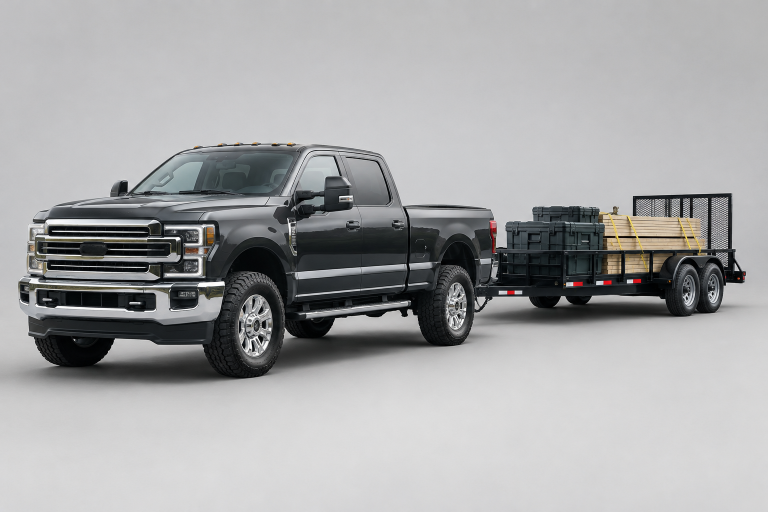
How to Calculate a Realistic Towing Setup
- Identify the trailer’s expected loaded weight.
- Estimate the expected tongue weight or fifth-wheel pin weight.
- Add passengers, tools, cargo, fuel, and installed accessories.
- Compare that total with the truck’s payload label.
- Confirm the ratings of the hitch, tires, wheels, axles, and trailer brakes.
- Check that the combined truck and trailer weight remains within the applicable GCWR.
Trailer weight + truck cargo + passengers + tongue or pin weight = the real load picture. When uncertainty remains, a certified scale provides useful real-world numbers.
Why Configuration Matters More Than the Badge
Two heavy-duty pickups with the same model name can have different ratings. Cab size, bed length, engine, axle ratio, four-wheel drive, luxury equipment, wheel and tire packages, and factory towing equipment all affect vehicle weight and capability. Larger aftermarket tires, bed racks, toolboxes, and suspension changes can also alter the setup. In Texas, where a truck may alternate between ranch work, construction duties, highway travel, and family transportation, the right configuration matters more than a badge on the tailgate. Verify the actual truck’s labels before committing.
Diesel or Gas: Which Fits the Work?
When Diesel Makes Sense
Diesel power may suit drivers who tow heavy loads frequently, travel long highway distances along corridors such as I-35 or I-10, use large fifth-wheel or gooseneck trailers, or value strong low-speed pulling performance up the grades of the Hill Country.
When Gas May Be the Better Fit
A gas engine may be a sensible fit for moderate or occasional towing, shorter trips to a lake weekend or a county fair, and trucks that spend much of their time unloaded. Purchase price, maintenance needs, fuel availability in rural stretches, and expected annual mileage all deserve consideration.
Trailer Setup Checks Before Every Trip
- Check cold tire pressure, tread condition, sidewalls, wheels, and lug nuts.
- Confirm the coupler is fully latched and safety chains are crossed beneath the tongue.
- Test brake lights, turn signals, marker lights, electrical connections, and trailer brakes.
- Balance cargo, secure it low when possible, and inspect tie-downs before leaving.
Loose tools, shifting equipment, and wind-blown debris can turn a routine haul into a hazard. Following practical cargo-securing guidance is especially important when hauling across open Texas roads where crosswinds and high speeds can expose weak tie-downs.
How to Reduce Trailer Sway
Keep heavy items low and near the trailer axles, maintain appropriate tongue weight, and use the correct hitch height. Slow down for wind, rain, rough pavement, hills, and passing traffic, especially on open Panhandle stretches where gusts can push a trailer sideways. Avoid abrupt steering, braking, and lane changes. If serious sway begins, remain calm, hold the steering wheel steady, reduce speed gradually, and avoid sharp corrective movements.
Daily Driving Still Matters
A heavy-duty pickup should work when it is not towing. Consider turning radius, ride quality, visibility, parking space, step-in height, rear-seat access, cabin storage, tire replacement costs, insurance, and routine service. A larger truck can be useful on a work site or acreage, but it may be less convenient in dense city areas like downtown Houston or Austin, or in tight parking garages.
Features That Make Towing Easier
Useful options include an integrated trailer brake controller, towing mirrors, trailer camera views, backup guidance, tow/haul mode, grade control or engine braking, and fifth-wheel or gooseneck preparation. These tools can reduce workload, but they cannot replace accurate weight calculations, sound maintenance, or careful driving.
When a Heavy-Duty Pickup May Be Too Much Truck
A lighter pickup may be a better choice when the trailer is light, towing occurs only a few times a year, parking is limited, or operating costs are a major concern. The correct answer is the smallest truck that safely meets verified needs with a reasonable margin, not necessarily the largest one available.
When It Is Time to Step Up From a Smaller Pickup
Consider a heavy-duty truck when payload is routinely tight, passengers and gear leave little margin, braking feels strained on grades, or a fifth-wheel or gooseneck hitch is needed. Uneven tire loading also warrants attention, as it can reduce stability and stopping performance, particularly when a vehicle is operating near its limits.
A Simple Pre-Purchase Checklist
- List the heaviest trailer and load you will genuinely tow.
- Add passenger, cargo, accessory, and hitch-weight estimates.
- Decide whether towing will be occasional, seasonal, or frequent.
- Choose the trailer connection type: bumper pull, fifth wheel, or gooseneck.
- Compare the exact truck’s labels, equipment, and operating costs.
- Take a test drive on Texas city streets and country roads with attention to visibility, comfort, parking, and daily usability.
Conclusion
The right Texas heavy-duty pickup should handle your regular workload and towing demands with enough capacity in reserve while remaining practical for everyday driving. Start by matching the truck to the fully loaded trailer weight, available payload, hitch requirements, and exact vehicle configuration, rather than relying solely on the model’s advertised maximum towing figure. Consider how passengers, tools, cargo, accessories, and trailer tongue weight affect the truck’s remaining capacity. It is also important to account for road conditions, travel distances, weather, and the type of work or recreation involved. Before each trip, inspect the tires, brakes, lights, hitch connections, trailer load distribution, and other essential equipment. A properly matched truck and trailer, combined with careful preparation and realistic expectations, can support safer and more dependable towing across Texas. This helps reduce excessive wear on the truck while supporting reliable performance during work tasks, recreational outings, and extended road trips.


